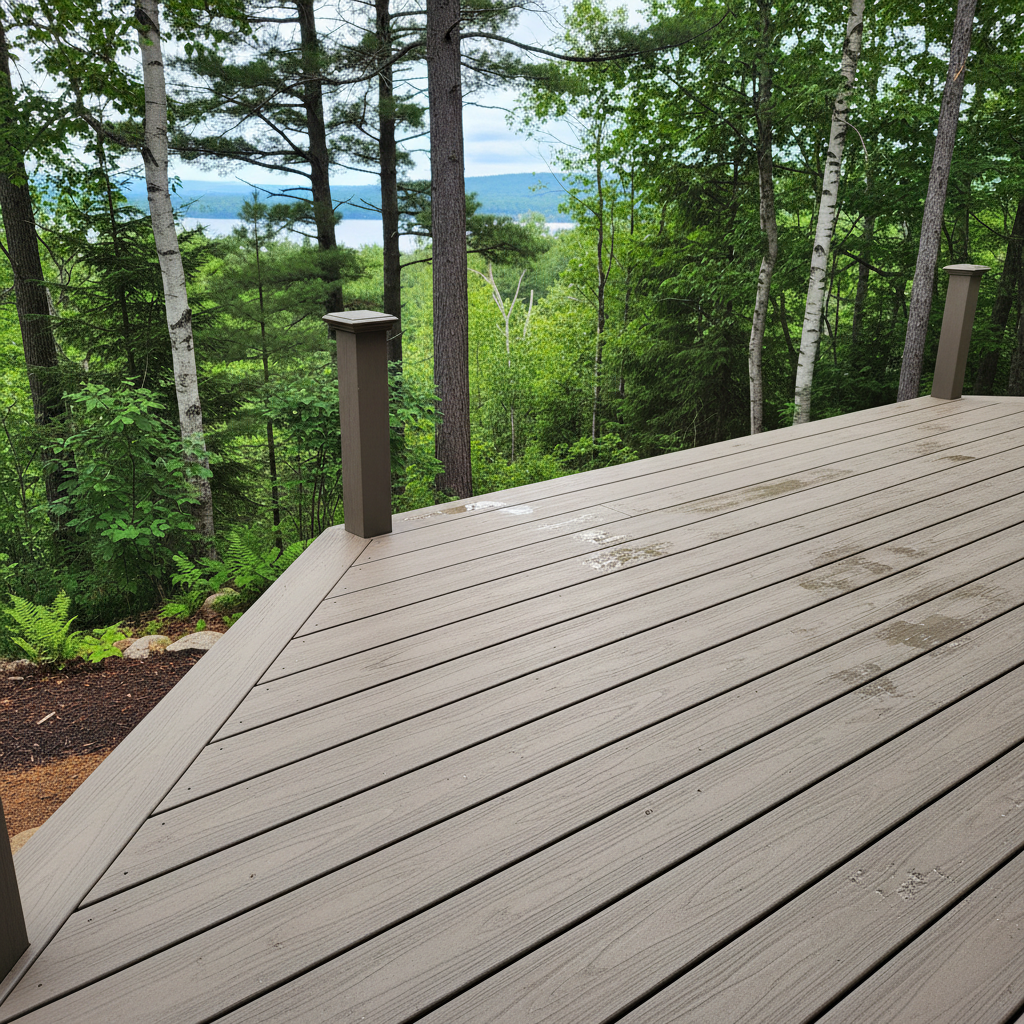
So, you're thinking about a Trex deck for your place here in Duluth. Smart move. Composite decking, especially Trex, has really come a long way. It's nothing like the flimsy stuff from twenty years ago, believe me. People around here love it because it genuinely holds up to our wild weather — the heavy snow, those brutal freeze-thaw cycles, and all that dampness rolling off Lake Superior. But before you dive in, let's chat about what you're actually getting into, and what parts you can handle yourself versus when it's just better to call in pros like us at Duluth Custom Decks.
Before You Start: Planning Your Trex Deck
Planning is probably the most crucial part of any deck project, Trex or otherwise. You've got to think beyond just the color of the boards, right? First off, what's this deck really for? Grilling and eating? Just lounging around? Maybe a hot tub? That'll totally dictate its size, shape, and even the substructure underneath.
Next up, permits. Seriously, don't skip this step. The City of Duluth has specific rules, and you absolutely do not want to build something only to have to tear it down later. They'll want to see plans for things like footings, framing, railings, and sometimes even snow load calculations. Those are pretty darn important when you think about how much snow we can get, especially in those hillside neighborhoods.
Then there's the design itself. Trex offers a ton of different lines and colors. Go grab some samples. See how they look in different light, both wet and dry. Think about your house's style; you want the deck to blend in, not stick out like a sore thumb. Oh, and consider the substructure. Trex boards need a super solid, properly spaced frame underneath them. We usually use pressure-treated lumber for the joists and beams, but sometimes steel framing makes more sense for really long spans or if you're after a truly low-maintenance setup.
DIY or Pro? Knowing Your Limits
This is where a lot of homeowners run into trouble. Can you build a Trex deck yourself? Sure, if you've got the skills, the tools, and the time. Installing the decking itself isn't exactly rocket science, but it does demand precision. You're cutting boards, setting gaps just right, and using specialized fasteners. Trex has specific gapping requirements for expansion and contraction, which become even more critical with our crazy temperature swings here.
Here's what I tell people:
- Footings and Framing: This is almost always a job for a professional, or at least someone with serious carpentry experience. Your deck's stability completely depends on proper footings that go below the frost line (which, let's be honest, is super deep here in Minnesota!) and a strong, level frame. If your frame isn't right, your Trex boards won't lay flat, and you'll have headaches for years.
- Decking Installation: If you're handy with a saw and a drill, and you've got some patience, you can probably handle laying the Trex boards. Just follow their instructions to the letter, especially when it comes to fasteners and gapping. Hidden fasteners are popular, no doubt, but they do take a bit more finesse than just face-screwing.
- Railings: Trex also makes railing systems, and they're designed to go together pretty smoothly. If you're comfortable with basic assembly, you can probably tackle this part. Just make sure everything is plumb, level, and meets code for height and baluster spacing.
- Stairs: Stair building? That's an art form. Getting the rise and run consistent, making sure everything is structurally sound, and integrating it seamlessly with the deck is tough. If you're not an experienced carpenter, I'd strongly recommend hiring a pro for stairs.
Honestly, most folks in Duluth who try to DIY a whole deck end up calling us for help at some point, usually with the framing or stairs. It's often cheaper in the long run to get the bones right from the very beginning.
During the Build: Tips for Success
Whether you're doing it yourself or watching us work, here are a few things to keep in mind. First, store your Trex boards properly. Keep them flat and well-supported to prevent warping. Don't just leave them leaning against a wall for weeks, okay? Second, read the instructions! Trex provides detailed guides for a reason. Don't assume you know it all.
Pay attention to drainage. You really don't want water pooling under your deck. Make sure the ground slopes away from your house. If you're building over a concrete patio or a low-clearance area, you might need special framing techniques or specific drainage solutions.
And for goodness sake, be safe. Wear eye protection, hearing protection, and proper footwear. Power tools are no joke, especially when you're working on something as big as a deck.
After the Project: Living with Your Trex Deck
The best part about a Trex deck? The maintenance is minimal compared to wood. You won't be staining or sealing it every couple of years. That's a huge win, especially when you consider how short our outdoor season is here. You want to be enjoying your deck, not working on it.
Still,