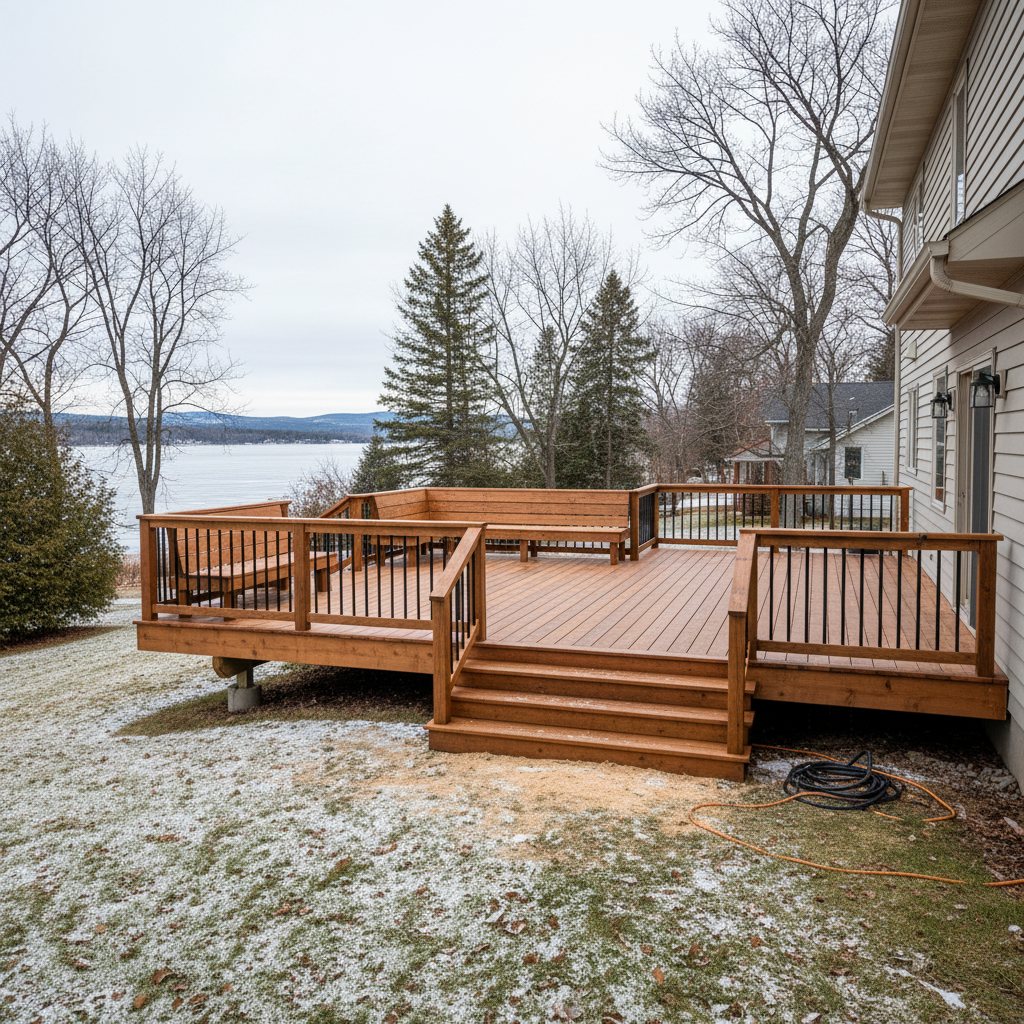
When's the best time to build a deck up here in Duluth? That's a question I get a lot, and it's a really good one. Our weather isn't exactly predictable, you know, and it definitely impacts everything from scheduling a build to keeping your deck in top shape year after year.
Figuring Out Our Duluth Deck Season
You might think summer's the only time for deck work, but that's not always the case. Sure, warm, dry days are perfect for things like staining and sealing, but the actual construction? We can do that across a much wider window. Here's how I see it:
- Spring (April - June): This is when things really get going. Once the ground thaws out and the mud dries up a bit, we can start digging footings. The cooler temperatures are actually great for the crew – less heat exhaustion, which is nice. The downside, though? Spring can be pretty wet, and that means delays. You really don't want to be pouring concrete or setting posts in a swamp, do you? Planning ahead is crucial here; if you want a deck ready for summer, you need to be talking to us at Duluth Custom Decks in late winter or early spring.
- Summer (July - August): Everyone wants their deck done in summer, which naturally makes it our busiest time. The weather generally cooperates, though we can get those intense afternoon thunderstorms that bring work to a halt. Lumber's usually at its best for handling and cutting when it's not freezing cold. The biggest challenge is scheduling – if you wait until July to call, you might be waiting a while.
- Fall (September - November): This is often an underrated time for deck building. The weather is usually quite stable, with fewer extreme heat days or torrential downpours than spring. Plus, the ground is typically dry. We can often get projects wrapped up before the really cold weather hits, meaning your deck is ready to enjoy next spring without all the rush. Just remember, once temperatures consistently drop below 40-50°F, some finishes like stains and paints won't cure properly, so we really need to keep that in mind.
- Winter (December - March): Building a deck in winter? It's not impossible, especially if we're talking about a composite deck where the materials aren't as sensitive to temperature. But for wood decks, it's tough going. Frozen ground makes digging a nightmare, and working with icy lumber isn't fun or efficient. On top of that, many finishes just can't be applied. We usually focus on planning and design during these months.
What Duluth Weather Does to Your Wood Deck
Our climate here in Duluth is just brutal on wood. We've got it all: freezing winters, heavy snow loads, rapid freeze-thaw cycles, wet springs, hot summers, and plenty of humidity off the lake. This constant assault means you can't just build a wood deck and then forget about it.
- Moisture is the Enemy: Rain, snow, ice, and even just high humidity all contribute to wood rot, mold, and mildew. When wood gets wet and then dries out repeatedly, it expands and contracts, leading to cracking and warping. This is especially true for decks built close to the ground, where airflow is limited and moisture can get trapped. I've seen plenty of decks on the hillside neighborhoods, like those in the Central Hillside or Lincoln Park, where the grade means one side is practically subterranean, and those areas really need extra attention for drainage and ventilation.
- UV Damage: Our summers might not be tropical, but the sun is strong. UV rays break down the lignin in wood, causing it to gray and become brittle. This isn't just an aesthetic issue; it actually weakens the wood fibers over time.
- Freeze-Thaw Cycles: This is a big one up here. Water seeps into the wood, freezes, expands, and then thaws. This process slowly tears the wood apart from the inside, leading to splits, checks, and fastener pops.
- Snow and Ice: Heavy snow loads put a lot of stress on the deck structure. Ice dams can form, trapping moisture against the wood. When the snow melts, that water needs somewhere to go, and if drainage isn't good, it just sits there.
Protecting Your Investment Year-Round
So, knowing all that, what can you do? A lot, actually.
- Regular Cleaning: Don't let leaves, dirt, and debris sit on your deck. They trap moisture and create a breeding ground for mold. A good sweep and occasional gentle wash with a deck cleaner (not a high-pressure washer that can damage wood fibers) goes a long way.
- Stain and Seal: This is your deck's armor. A good quality stain or sealer protects against UV rays and, more importantly, repels moisture. How often? It depends on the product and exposure, but generally every 2-3 years for transparent/semi-transparent, or 3-5 for solid stains. Keep an eye out for water no longer beading on the surface – that's your sign.
- Check for Damage: Do a quick inspection a couple of times a year, especially after winter. Look for loose railings, popping nails or screws, splinters, and soft spots that might indicate rot. Catching small issues early saves you big headaches (and money) later.
- Snow Removal (Carefully): While your deck is built to handle snow, you can help by gently clearing heavy accumulations, especially around railings and stairs. Just be careful not to gouge the wood with a shovel. Leave a thin layer of snow to protect the surface if you can.
- Ensure Good Drainage: Make sure water isn't pooling on or around your deck. Clear gutters, ensure downspouts direct water away, and if you have landscaping around the deck, make sure it's not trapping moisture.
Building a quality deck with proper footings and good materials is the first step, and that's where a company like Duluth Custom Decks comes in. But keeping it looking good and lasting long? That's a partnership. A little proactive care throughout the year makes a huge difference in how your wood deck handles our unique Duluth climate.