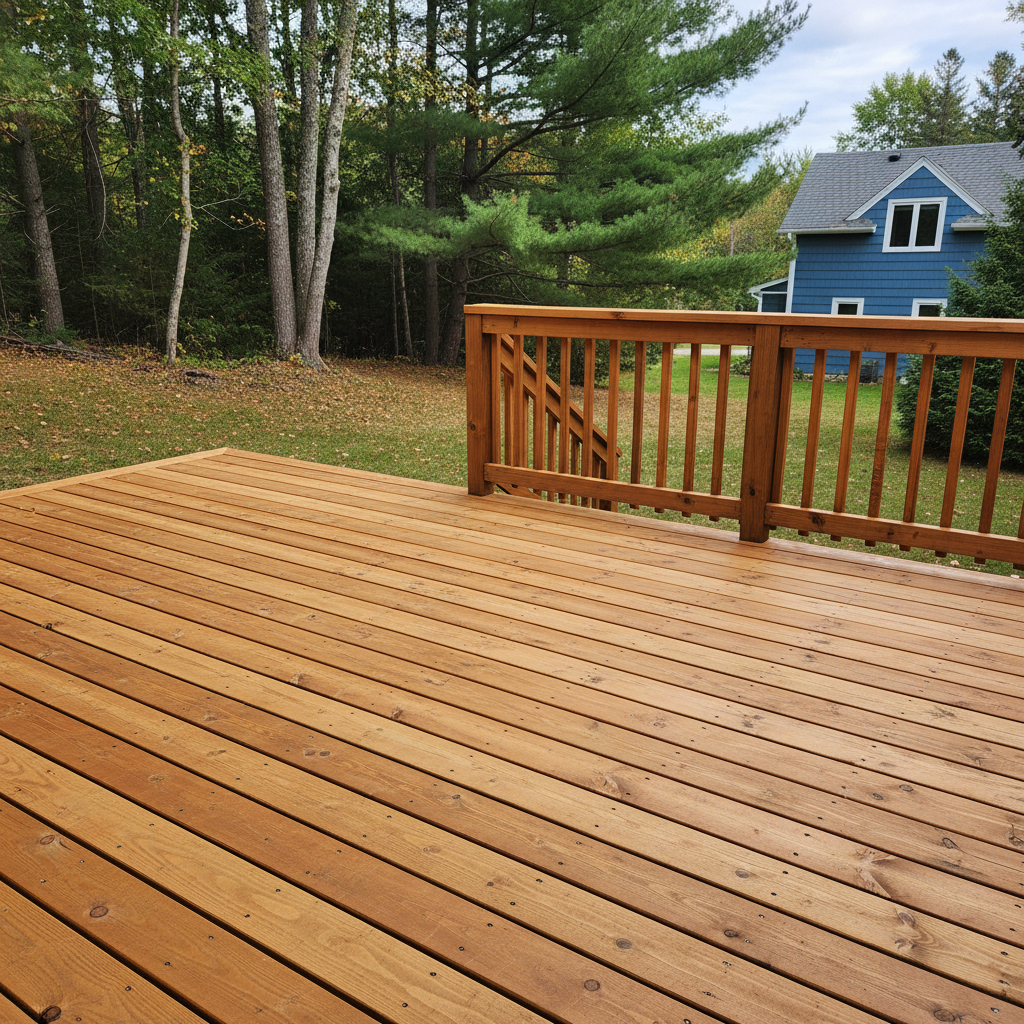
Is your deck looking a little tired? Maybe a board feels spongy, or a railing feels a bit loose. Here in Duluth, our decks really take a beating. Between those brutal winters, the constant freeze-thaw cycles, and the occasional heavy summer downpour, it's really no wonder things wear out. But if you catch problems early and know what to do, you can save yourself a lot of headache and money down the road.
Making Your Deck Last Longer in Our Climate
You want your deck to last as long as possible, right? Especially after putting so much into it. Beyond the initial build quality, the biggest thing you can do to extend its life is protect it from moisture. Water is wood's worst enemy, and even composite decks can suffer if water gets trapped in the wrong spots.
- Keep it Clean: This sounds simple, but dirt, leaves, and pine needles hold moisture right against the deck surface. A good sweep or blow-off regularly, especially after storms or when leaves fall, makes a huge difference.
- Ensure Good Drainage: Make sure water isn't pooling anywhere on or under your deck. If your deck is close to the ground, good airflow and drainage underneath are key. For elevated decks, double-check that your gutters aren't dumping directly onto the deck or splashing back.
- Seal and Stain Regularly: This is a big one for wooden decks. Our climate practically demands it. I've probably mentioned this in other posts, but it's worth saying again: a good quality stain or sealant acts like a shield against UV rays and moisture. Don't let it wear off completely.
- Trim Back Vegetation: Keep bushes and trees from touching the deck. They hold moisture, block sunlight (which helps dry things out), and can even bring in pests.
Regular Maintenance: Your Deck's Annual Check-up
Think of this like your deck's yearly physical. A little proactive work now really goes a long way.
- Spring Cleaning: After the snow melts away, give your deck a good, thorough cleaning. A gentle power wash (be careful not to damage the wood or composite, of course) or a good scrub with deck cleaner will get rid of all that mildew, dirt, and grime that built up over winter.
- Inspect Fasteners: Check every single screw, nail, and bolt. Are any popping up? Are any loose? Tighten screws, re-set nails, and replace anything that's corroded or failing. This is super important for railings and stair treads.
- Check for Rot: Grab a screwdriver and poke around in any suspicious areas, especially where wood meets wood, or where water might sit. Pay close attention to the bottom of posts, joists, and stair stringers. If the wood feels soft or crumbles, you've got rot brewing.
- Railings and Stairs: Give those railings a good shake. Are they sturdy? Are balusters loose? For stairs, check every tread for stability and make sure the stringers aren't splitting or rotting. These are major safety concerns, you know.
- Clear Debris Underneath: Critters love to nest under decks, and debris can trap moisture. Keep that area clear.
Warning Signs: When Something's Just Not Right
Your deck will tell you when it needs help, if you know what to look for. Don't ignore these signals:
- Soft or Spongy Boards: This is a classic sign of rot. If a board gives way underfoot, it's compromised and needs attention right away.
- Cracked or Splintered Wood: Minor cracks are normal, but deep, long cracks can mean structural weakness or that the wood is drying out too much. Splinters are also a hazard, obviously.
- Loose Railings or Posts: This is a huge safety issue. If you can wiggle a railing or a post by hand, it's just not safe.
- Wobbly Stairs: Same deal as railings. Stairs need to be rock solid.
- Fungal Growth or Discoloration: Black or green patches, especially in shaded areas, mean mildew or algae. While not always a structural problem, it points to moisture issues and can lead to rot eventually.
- Rusting Fasteners: If screws or nails are rusting, they're losing their strength. This is pretty common with our humid summers and wet springs.
- Sagging or Uneven Surfaces: If a section of your deck is noticeably dipping or just looks uneven, it could be a sign of foundation issues, rotting joists, or failing supports. This is serious stuff.
When to Call a Professional for Deck Repair
Look, I'm all for doing things yourself, but some jobs are definitely best left to the pros. Especially when safety is involved. You should absolutely call someone like us at Duluth Custom Decks if:
- You suspect structural damage: This includes rotting joists, beams, or ledger boards (that's the board that connects the deck to your house). These are critical components, after all.
- Major sections are sagging or unstable: If the whole deck feels wobbly or a large area is dipping, don't try to fix it yourself. There could be foundation or major framing issues at play.
- Extensive rot: A single rotten board is one thing, but if rot is widespread, it's time for a professional assessment.
- Railing or stair failure: If multiple railings are loose or a whole flight of stairs is unstable, you need an expert to make sure it's properly repaired and up to code.
- You're unsure: If you see something concerning and you're not confident in your ability to diagnose or fix it safely, just call. It's truly better to be safe than sorry. We deal with all sorts of deck issues, from minor fixes to full rebuilds, especially with older decks up on the hillside neighborhoods where soil movement can be a factor.
Your deck is an extension of your home, a place for relaxing and entertaining. Taking good care of it means it'll take care of you for years to come. Don't put off those small repairs; they almost always turn into bigger, more expensive ones.