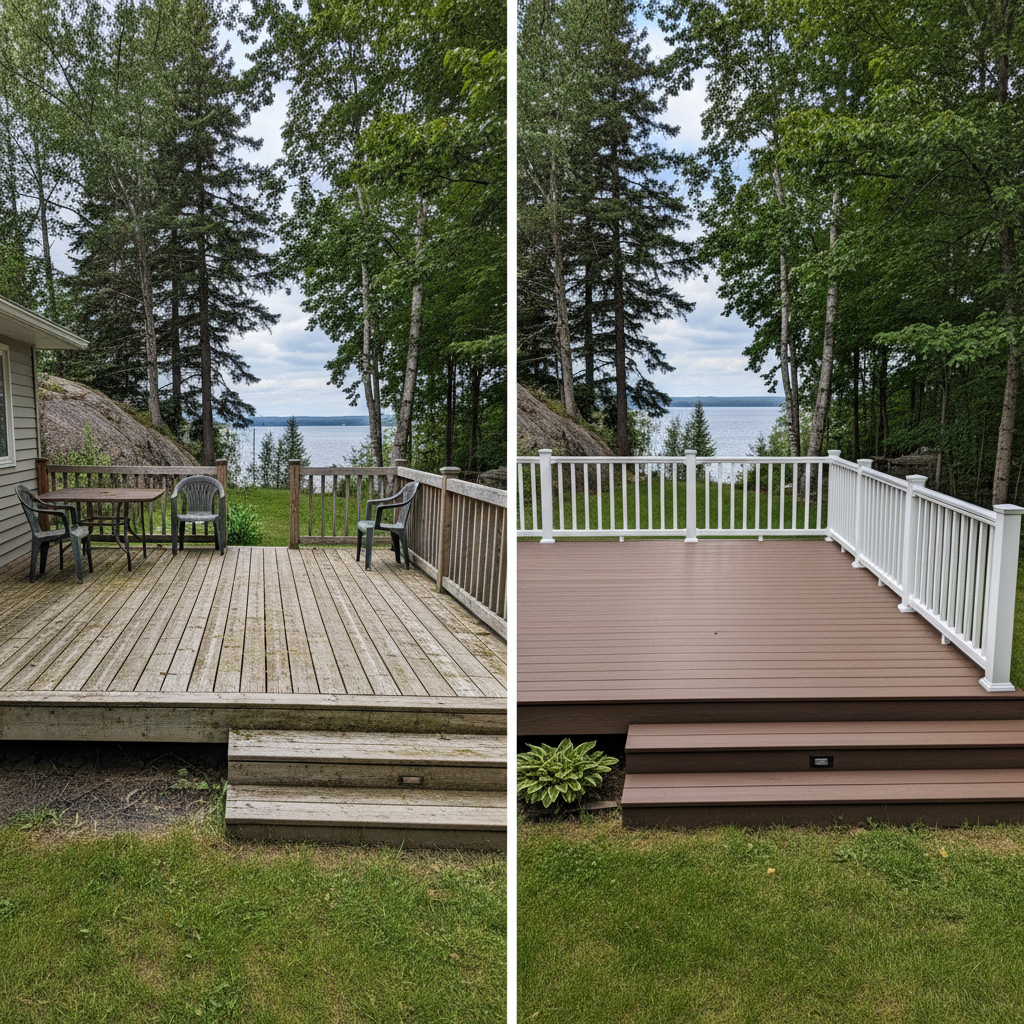
Alright, let's talk composite decks. A lot of folks around Duluth are leaning this way these days, and for good reason. Less maintenance than wood, no splinters, and they look great for years. But it's not as simple as just picking 'composite.' You've really got two main types to think about: uncapped and capped. And knowing the difference is crucial, especially with our wild weather here on the hill.
Uncapped Composite Decks: The Original
When composite decking first hit the market, it was all uncapped. Think of it as a solid mix of wood fibers and plastic, pressed together. It was a huge step up from wood in terms of rot and insect resistance, and you didn't have to stain it every year. That was a big win for homeowners tired of sanding and sealing.
The Good:
- Usually a bit cheaper upfront than capped versions.
- Still way more durable than wood when it comes to rot and insects.
The Not-So-Good:
- Because it's exposed wood fiber, it can still soak up moisture. This means it can mildew and stain. You'll see this more in shady spots or areas that stay damp, which, let's be honest, is pretty common with our fog and rain coming off Lake Superior.
- It can fade over time, especially if it gets a lot of direct sun.
- Cleaning can be a bit more work. You might need to scrub harder to get rid of stains or mildew.
- It's more prone to scratching and scuffing, and those can be tough to hide.
So, while it was an improvement, uncapped composite still had some quirks that needed managing.
Capped Composite Decks: The Evolution
This is where the industry really stepped up its game. Capped composite decking takes that original wood-plastic core and wraps it in a protective polymer shell – basically, a super-durable plastic coating. It's like giving the deck board its own armor, you know?
The Good:
- Superior Stain Resistance: This is huge. Spilled wine, grease from the grill, mud from the garden – most of it just wipes right off. That cap forms a barrier.
- Fade Resistance: The cap is engineered to resist UV rays, so your deck keeps its color much, much longer. It won't look bleached out after a few summers.
- Mold and Mildew Resistance: Since the wood fibers aren't exposed, moisture can't get in and promote growth. This is a big deal in Duluth, especially in those north-facing yards that don't dry out quickly.
- Scratch and Scuff Resistance: That hard shell makes it much tougher against everyday wear and tear. Moving furniture or kids playing won't leave as many marks.
- Less Maintenance: Seriously, a quick wash with soap and water is usually all it takes to keep it looking great. No more power washing mildew off.
The Not-So-Good:
- Higher Upfront Cost: You're paying for that advanced technology and durability. It's an investment, no doubt about it.
- Some folks say it can feel a bit more 'plasticky' underfoot, but modern capped composites have come a long way in mimicking natural wood textures.
Which One Should You Choose for Your Duluth Home?
If you're building a new deck or replacing an old one here in Duluth, my honest recommendation is almost always capped composite decking. Yes, it costs more upfront. I'm not going to sugarcoat that.
But think about our climate. We get everything: heavy snow, freezing rain, hot humid summers, and those damp, foggy days. Uncapped composite just doesn't stand up to that kind of abuse as well as a capped board. You'll be fighting mildew, stains, and fading a lot sooner with uncapped.
With a quality capped product, you're buying peace of mind. You're getting a deck that will look fantastic with minimal effort for decades. When Duluth Custom Decks builds a deck, we want it to be something you're proud of and don't have to constantly fuss over. The extra cost for capped decking pays for itself in reduced maintenance, better appearance retention, and a longer lifespan. It's a better long-term value, especially when you factor in the labor and materials you'd spend trying to keep an uncapped deck looking good.
Ultimately, it's your call. But if you want to enjoy your deck without worrying about it, capped composite is the way to go here in the Northland.